

Cold room
Special panel for wall, ceiling and door of cold room
Design, consultation and construction of industrial and small cold storage
Building a cold room with sandwich panels is an efficient and modern solution for food storage. With metal outer layers and a polyurethane core, these panels provide excellent insulation, maintain stable internal temperatures, and reduce energy loss. Lightweight and quick to install, they also offer moisture and corrosion resistance, durability, hygiene, and design flexibility—making them ideal for food and fruit storage facilities.

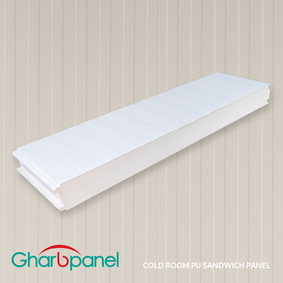


Why is a cold storage sandwich panel made of polyurethane foam?
Polyurethane (PU) foam is a highly effective insulating material with mostly closed pores, making it ideal for thermal insulation. PU panels can withstand air temperatures of 100–110 °C and provide better insulation than polystyrene, allowing for thinner walls. Unlike polystyrene panels, PU insulation is directly bonded to metal sheets without glue, ensuring long-term stability and durability.
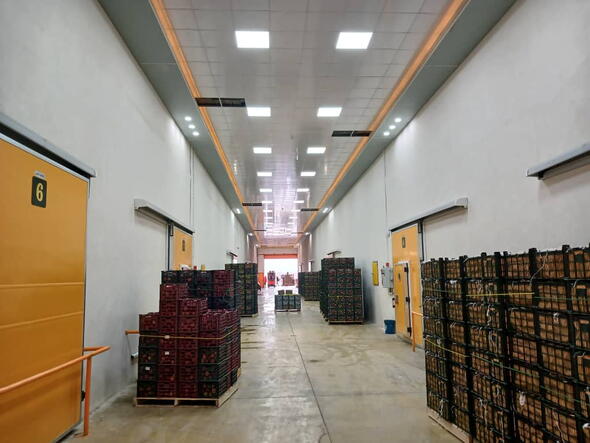
Features of sandwich panel cold storage of Fooladgharb
-

Superior thermal insulation -

High durability -

Waterproof and weatherproof -

Fire resistance -

Acoustic insulation -

Quick and easy installation
How to choose sandwich panels for cold storage
Polyurethane (PU) sandwich panels are ideal for cold storage due to their excellent insulation. Panel thickness should be selected based on the application, climate, and budget. PU panels are suitable for industrial cold storage and food or agricultural products. While their higher cost may not be economical for simple storage sheds, their high insulation makes them energy-efficient and cost-effective in the long term. Thicker insulation provides better temperature control for cold rooms.
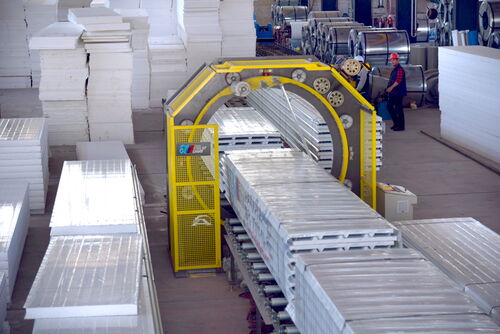
Call for Advice
Cold Storage Types and Sandwich Panel Insulation
Maintaining a stable, low temperature is essential in cold storage for food, pharmaceuticals, and medical applications. Sandwich panels are ideal for this purpose due to their low heat transfer, keeping internal temperatures consistent.
Cold storage is generally classified as short-term or long-term, based on temperature and product shelf life. Short-term storage (1–4 °C) preserves fruits, vegetables, and dairy for up to 15 days. Freezing can be done slowly or quickly—via direct or indirect contact with a freezing agent or through high-speed cold air in freezing tunnels, which can reach −40 °C.
Above-zero cold rooms serve as pre-coolers for protein products, dairy, and produce, while freezing tunnels store ice cream, chocolate, and other frozen items. In both cases, sandwich panels are commonly used for insulation.

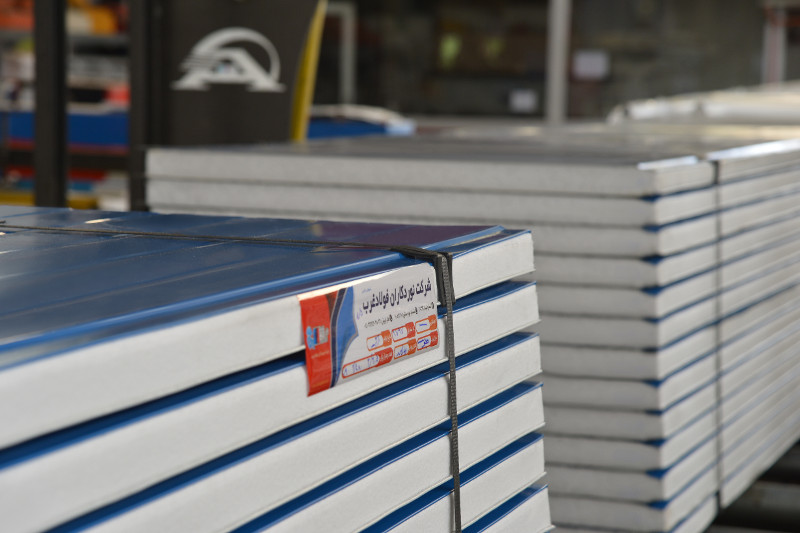
Fooladgharb polyurethane sandwich panels offer versatile solutions for cold storage, from large freezers to temperature-controlled rooms. Made with colored galvanized or stainless steel sheets (JIS G 3312 standard) and a polyurethane core, these panels are suitable for walls, roofs, floors, partitions, and doors.
Polyurethane insulation ensures consistent low temperatures, even with panels around 15 cm thick. Produced to international standards and customized for climate and budget, these panels also resist bacteria, grease, and dust—making them ideal for food, meat, and industrial cold storage facilities.
Advantages of using sandwich panels in cold storage
- Thermal Insulation: The polyurethane (PUR) core offers excellent thermal resistance, ensuring consistent internal temperatures and reducing energy consumption.
- Moisture Resistance: Constructed with materials resistant to moisture and corrosion, these panels help prevent the formation of ice and mold, maintaining a hygienic environment.
- Fire Resistance: Depending on the core material, these panels can provide fire-resistant properties, enhancing safety in case of fire incidents.
- Hygienic Surface: The smooth, easy-to-clean surfaces of the panels ensure compliance with hygiene standards, making them ideal for food and pharmaceutical applications.
- Quick Installation: Designed for efficient assembly, these panels reduce construction time and labor costs.

FAQ – Cold Rooms
What is a Cold Room?
A cold room is an insulated space used to store perishable goods at controlled temperatures, ensuring freshness and safety in food, pharmaceuticals, and other temperature-sensitive products.
What are the key characteristics of a Cold Room?
It should be well-insulated, airtight, and stable, maintaining a consistent temperature. Size and layout depend on storage needs and space availability.
What materials are used for Cold Rooms?
Sandwich panels with a polyurethane core and metal sheets are ideal. PU provides strong, lightweight insulation while the sheets add structural strength.
What types of Cold Rooms exist?
Cold rooms vary by temperature range and usage, including above-zero storage for fruits and vegetables, and freezing rooms for ice cream, meat, and frozen products.
What additional equipment do Cold Rooms have?
Modern cold rooms include temperature controllers, thermometers, lighting, air vents, and shelving systems to ensure proper storage conditions.
What factors affect the price of a Cold Room?
Price depends on panel material quality, insulation thickness and density, sheet type, and additional features. Lower-quality or used panels may reduce costs but can affect hygiene, durability, and performance.